

The semiconductor industry is a powerful force driving technological advancement across various sectors and is currently at a critical crossroads. Leading semiconductor companies are consistently working to push the limits of chip design and manufacturing (often called “fab”). However, they face a complex web of regulations that challenge their ongoing pursuit of innovation. Understanding and navigating these regulations is essential for semiconductor companies, regardless of their size, to ensure sustained growth and influence in shaping the future.
This article will explore the complicated landscape of semiconductor regulations, highlighting both the challenges they present and the opportunities they create. The discussion will cover key areas of regulatory focus, the implications for different industry players (from major semiconductor firms to smaller design companies), and strategies for successfully navigating this intricate environment.
The Engine of Progress: Why Regulations Matter
Semiconductors are the foundation of modern electronics, powering smartphones, cloud infrastructure, automotive systems, medical equipment, industrial automation, and AI-driven technologies. As semiconductor nodes continue shrinking into advanced nanometer-scale processes, chip manufacturing becomes increasingly complex, creating new environmental, operational, and security challenges. This is where regulations play a critical role in ensuring responsible innovation and sustainable industry growth.
Get in touch
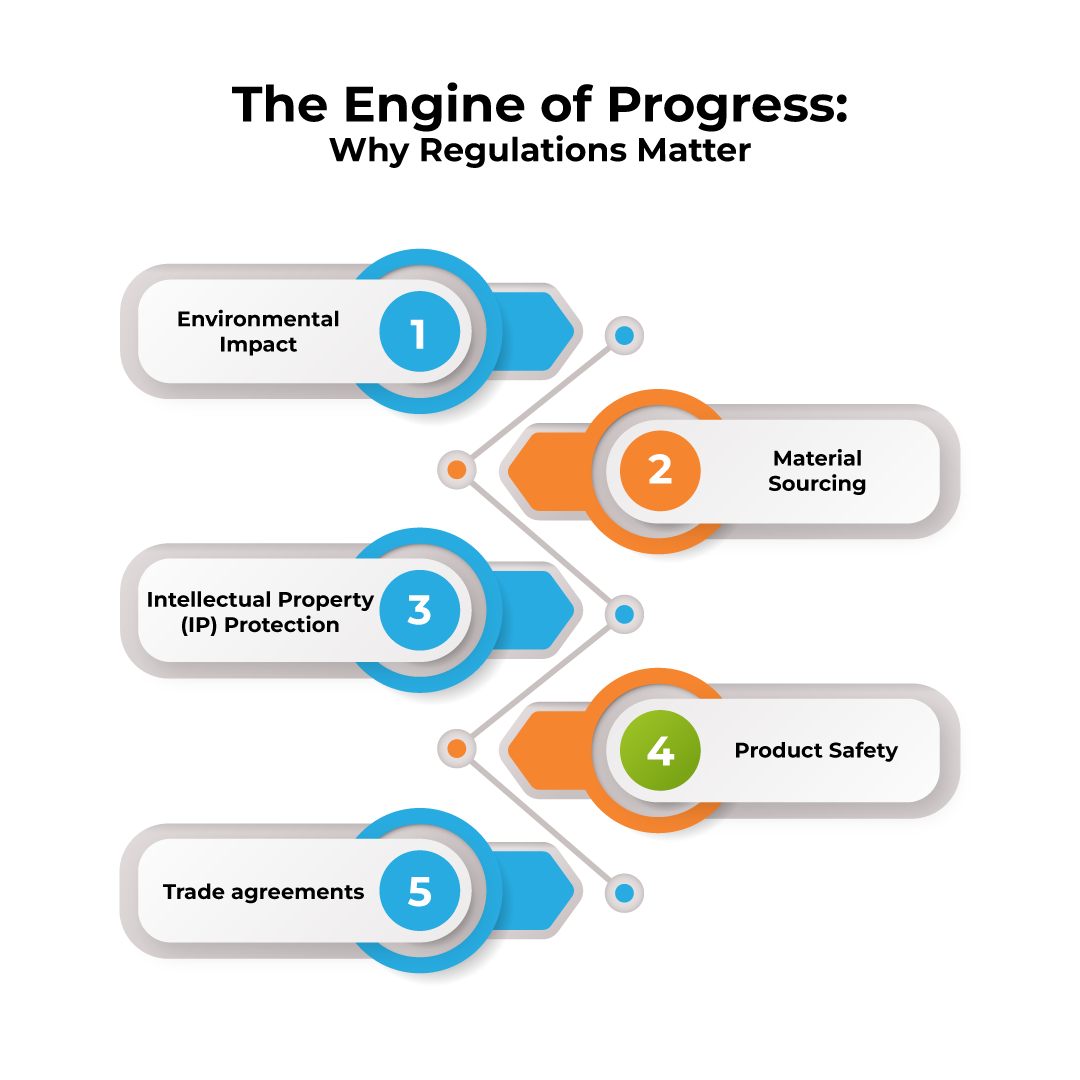
- Environmental Impact: Environmental regulations focus on reducing hazardous waste, chemical emissions, and excessive energy and water consumption generated during semiconductor fabrication. Manufacturers are expected to adopt cleaner production practices and sustainable resource management strategies.
- Material Sourcing: Material sourcing regulations ensure that raw materials such as rare earth elements and specialty metals are ethically procured without contributing to environmental damage or conflict-based supply chains.
- Intellectual Property (IP) Protection: Intellectual Property regulations protect advanced semiconductor architectures, chip designs, and proprietary manufacturing technologies from unauthorized usage or duplication, encouraging continued investment in research and development.
- Product Safety: Product safety and reliability standards are essential for chips used in automotive, aerospace, healthcare, and industrial systems, where hardware failures can lead to severe operational and safety consequences.
- Trade agreements: Trade regulations, export controls, and cybersecurity requirements increasingly influence semiconductor manufacturing, global supply chains, and access to advanced technologies across international markets.
These are just some examples, and the specific regulations a semiconductor company encounters will vary depending on its location, the type of chips it produces, and its target markets.
Challenges
- Compliance Costs: Implementing and maintaining compliance with regulations can be a significant expense. This can be particularly burdensome for a smaller semiconductor design company that may not have the resources of larger fabs.
- Market Access Delays: Navigating complex export control procedures can delay the entry of new technologies into specific markets.
- Innovation Stifling: Overly restrictive regulations can inadvertently hinder innovation by limiting access to essential materials or technologies.
- Talent Gap: Understanding and navigating regulations requires specialized expertise in semiconductor engineering, legal matters, and international trade. There is often a shortage of professionals with this skill set.
Opportunities
- Competitive Advantage: Companies with a strong grasp of regulations can gain a competitive advantage by ensuring their products comply with all relevant standards, positioning them as trustworthy partners.
- Market Leadership: Semiconductor companies can proactively shape future regulations by engaging with policymakers and advocating for policies that support responsible innovation and fair trade practices.
- Sustainability Focus: Stringent environmental regulations can act as a catalyst for developing innovative and sustainable manufacturing practices.
Strategies for Navigating Complex Regulations
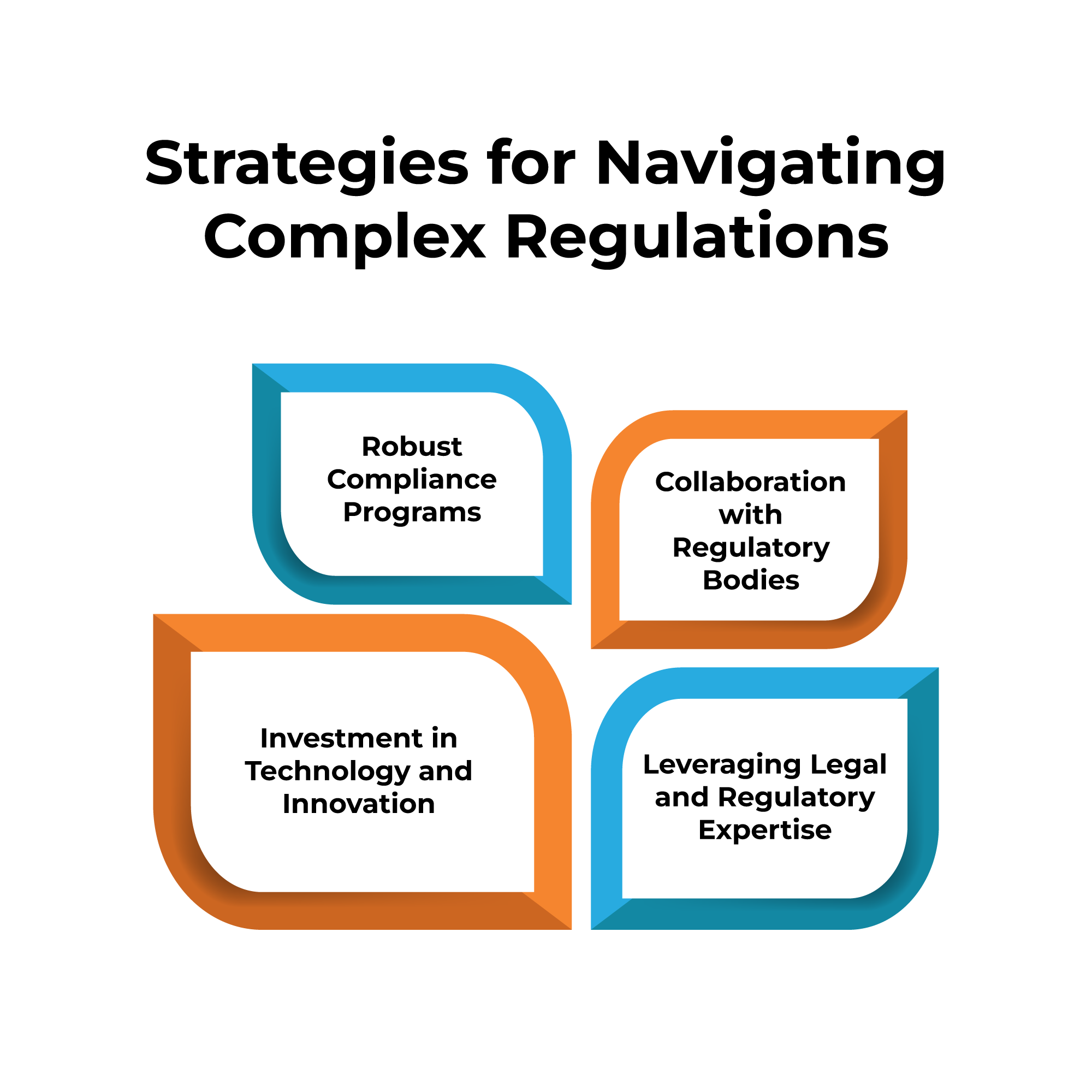
Robust Compliance Programs
To effectively navigate the complex regulatory landscape, semiconductor companies need to establish robust compliance programs. These programs should include comprehensive training for employees, regular audits, and a clear understanding of relevant regulations. By fostering a culture of compliance, companies can minimize the risk of violations and ensure smooth operations.
For example, a top semiconductor company might involve a dedicated compliance team responsible for monitoring changes in regulations, conducting internal reviews, and ensuring that all departments adhere to legal requirements. This proactive approach helps identify potential issues early and address them before they escalate.
Collaboration with Regulatory Bodies
Engaging with regulatory bodies can also be beneficial. By participating in industry groups and working closely with regulators, semiconductor companies can gain insights into upcoming regulatory changes and provide feedback on proposed rules. This collaboration can help shape regulations in a way that balances industry needs with governmental objectives.
Investment in Technology and Innovation
Investing in technology and innovation is another key strategy for navigating regulations. Advanced technologies can help semiconductor companies meet regulatory requirements more efficiently. For instance, innovations in green manufacturing techniques can reduce environmental impact, while advanced encryption technologies can enhance data protection and cybersecurity.
The biggest semiconductor company often leads the way in adopting such innovations. By staying at the forefront of technological advancements, these companies can not only comply with current regulations but also anticipate future regulatory trends.
Leveraging Legal and Regulatory Expertise
Investing in technology and innovation is another key strategy for navigating regulations. Advanced technologies can help semiconductor companies meet regulatory requirements more efficiently. For instance, innovations in green manufacturing techniques can reduce environmental impact, while advanced encryption technologies can enhance data protection and cybersecurity.
The biggest semiconductor company often leads the way in adopting such innovations. By staying at the forefront of technological advancements, these companies can not only comply with current regulations but also anticipate future regulatory trends.
The Future of Regulation in the Semiconductor Industry
As semiconductor technologies continue to evolve, the regulatory landscape will become even more complex. Emerging technologies such as:
- Artificial Intelligence (AI)
- 5G and 6G
- IoT ecosystems
- Quantum computing
- Autonomous systems
- Advanced AI accelerators
will introduce new regulatory challenges related to:
- Data security
- Cyber resilience
- Cross-border data flows
- AI governance
- Supply chain security
Chip security and hardware-level trust are also becoming major regulatory priorities as cyber threats continue to increase globally.
To stay competitive, semiconductor companies must remain agile and adaptable. This involves:
- Monitoring regulatory developments continuously
- Investing in compliance and innovation
- Building resilient supply chains
- Collaborating with regulators and industry peers
By doing so, organizations can not only navigate the current regulatory environment but also help shape the future of the semiconductor industry.
The Impact of 5G Technology on the Future of Embedded Systems
Let’s Sum Up
The semiconductor industry is positioned at the vanguard of technological advancement. As the industry undergoes transformation, regulatory measures will play a pivotal role in shaping its trajectory. Through proactive engagement with policymakers, adoption of a forward-looking compliance stance, and promotion of collaborative efforts, semiconductor enterprises can adeptly navigate the complexities of regulations. Furthermore, they can contribute to the development of a regulatory framework that fosters responsible innovation, equitable competition, and ensures a sustainable future for the industry. The journey towards shaping the future of semiconductors necessitates a concerted endeavor involving governments, industry magnates, and all pertinent stakeholders. With collaborative endeavors, we can ensure that this indispensable technology continues to propel progress and bestow benefits upon society at large.
FAQs
1. Why are semiconductor industry regulations becoming more important in 2026?
Semiconductor regulations are increasing due to cybersecurity concerns, export controls, sustainability requirements, and global supply chain security demands.
2. What are the leading compliance strategies for semiconductor companies?
Leading strategies include robust compliance programs, regular audits, regulatory monitoring, cybersecurity implementation, and collaboration with regulatory bodies.
3. What are the biggest regulatory challenges in semiconductor manufacturing?
Key challenges include compliance costs, export restrictions, environmental regulations, supply chain risks, and rapidly evolving global policies.
4. How do semiconductor companies manage complex regulatory requirements?
Companies manage regulations through dedicated compliance teams, legal expertise, risk management frameworks, and advanced compliance technologies.
5. What is the future of the semiconductor industry amid evolving regulations?
The semiconductor industry will continue growing through AI, IoT, 5G, and advanced chip technologies while adapting to stricter global regulations.