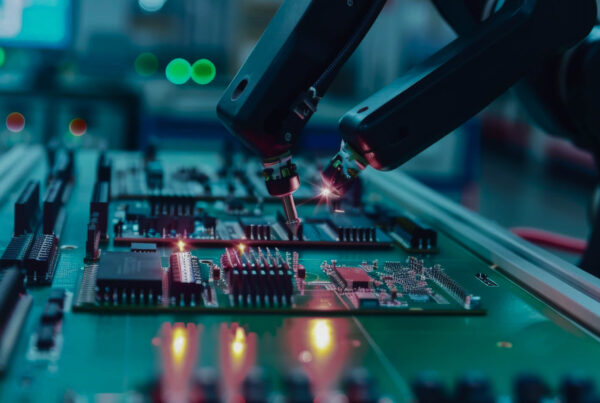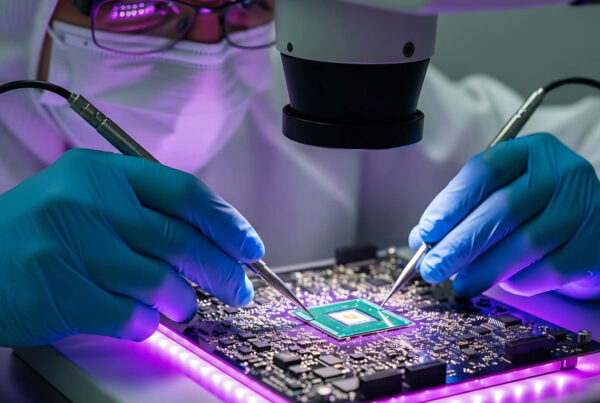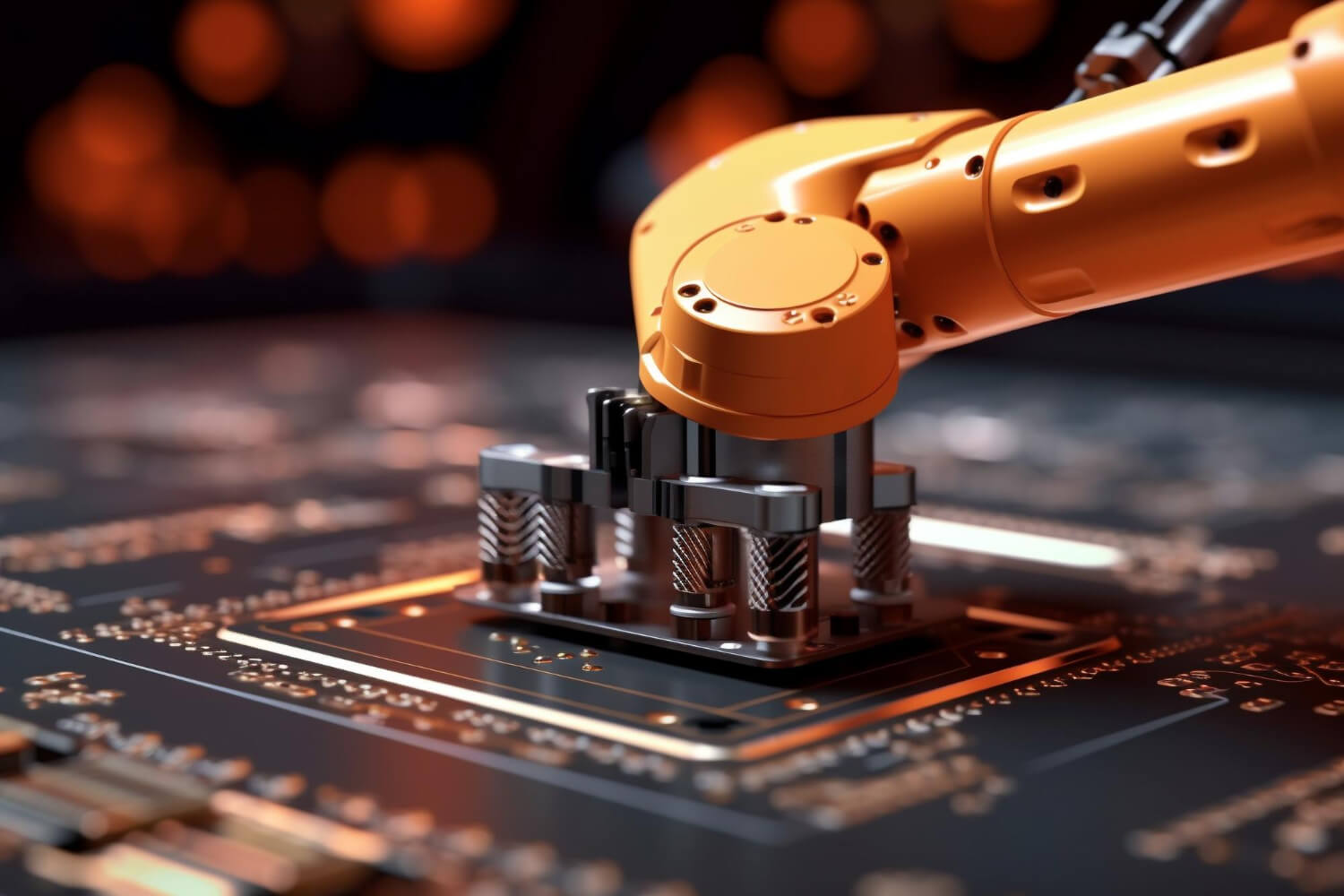
Every electronic device consists of several meters of wiring and numerous small copper components. These parts work together seamlessly to enable the device to function properly, whether it is a television, smartphone, or remote control. All the wires and components are connected to a thin-layered board known as a PCB, or printed circuit board. Engineers assemble these components on the surface to create an organized framework that allows the small, individual components to interact and work together effectively.
About PCB Designing
PCBs consist of conductive material mounted on insulating material. When PCBs are divided, you get two classes: the single-layer PCB and the double-layer PCB. The difference is that the single-layer PCB has a single-sided conductive coating, whereas the double-layer PCB has a conductive coating on both sides.
Modern PCB designs also include multilayer boards with complex stack-ups to support high-density and high-speed circuits.
One way to reduce heating in PCB designs is to widen the traces. This is one of the many routing rules followed during PCB design. The greater the distance between traces, the lower the current resistance.
Trace width, spacing, and copper thickness are now optimized together to balance current-carrying capacity and thermal performance. Hardware design engineers can introduce advanced capabilities through automated trace routing in electronic devices.
What Is Automated Routing?
Automated trace routing is a way of designing for the PCB and the integrated circuits. The process of placement is automated by integrating with a PCB. The proper placement for each component of a PCB is identified through the dynamic method.
The automated trace routing method permits you to implement an automatic routing system that makes all the placements systematically. With the assistance of automated trace routers, the productivity of encoders can increase as they do not have to waste time providing manual routing solutions.
Modern routing tools leverage advanced algorithms and constraint-driven engines to handle complex, high-density PCB layouts efficiently.
How to Efficiently Achieve PCB Automated Routing
1. Identify the Number of Layers of PCB
Board size and the number of routing layers should be considered early during the design process. Suppose the design needs the utilization of high-density ball grid array components. In that case, you must consider the minimum number of routing layers required to route the devices; the board size helps determine the stacking and line width to achieve the required design. In the initial stages of design, it is good to use more circuit layers and distribute the copper evenly to prevent certain signals from not adhering to the set rules and requirements at the end, thereby avoiding the need to add more layers. Careful planning before design helps to minimize many routing issues. Hardware design engineers fabricate a design for optimum efficiency.
2. Design Rules and Restrictions
The routing tool must work as per the proper rules and constraints. Various signal lines have various routing needs, and such memorable signal lines have different classifications. Every signal class has a priority with strict rules, and the rules have a significant impact on the routing tool performance.
3. The Layout of the Components
For optimizing the assembling process, design for manufacturability regulations put restrictions on the layout of components. If the components are allowed to move by the assembly department, it allows for proper optimization for automated routing. One should consider routing channels and via areas while laying out, and the automatic routing tool can consider only a single signal at a time.
4. Fan-Out Design
In this phase, every pin of the surface-mount device must have a minimum of one via for the board to perform the circuit reprocessing, inner layer connectivity, and online testing if more connections are required. The routing tool can be made more efficient by using the largest via size and printed routing with the interval set to 50 mils. While performing a fan-out design, you should consider the online test of the circuit. After that, the circuit online test design can be done at the beginning of the design and executed afterward in the production process. The kind of via fan-out is selected through the circuit online test and routing path.
5. Automatic Routing
Routing critical signals requires careful consideration of electrical parameters such as inductance and electromagnetic compatibility (EMC). Routing tools must be configured with the correct input parameters to ensure quality results. High-speed routing requires attention to signal integrity, return paths, and minimal via transitions. Constraints can be applied to control routing layers, via usage, and signal paths. Without restrictions, tools may generate inefficient routing. Once a portion of the routing is finalized, it should be locked to prevent unintended changes.
Design Considerations for Automatic Routing Include
- Modify routing settings slightly and test different configurations
- Keep core rules unchanged while experimenting with layers, spacing, and widths
- Use different via types, such as blind and buried vias
- Allow routing tools to handle less critical signals automatically
- Prioritize critical signals for controlled routing
Combining automated routing with manual refinement ensures optimal performance, especially in high-speed and complex PCB designs.
Automated Library Management & BOM Scrubbing: Ensuring Integrity in High-Complexity Designs
Tessolve: Your Partner in PCB Automated Routing
Tessolve is one of the leading professional printed circuit board solution providers with strong expertise in automated routing. We ensure maximum efficiency through advanced routing strategies and engineering expertise.
Our approach combines automated routing tools with expert validation to achieve high-performance and manufacturable PCB designs. Looking for best-in-class PCB solutions? Get in touch with Tessolve today!
Frequently Asked Questions
1. What is PCB routing?
PCB routing is the process of creating electrical connections between components using conductive traces, ensuring proper signal flow, performance, and functionality of the circuit.
2. How do automatic routing tools work in PCB design?
Automatic routing tools use predefined design rules and algorithms to connect components, optimize trace paths, and improve routing efficiency in complex PCB layouts.
3. Is automated routing better than manual routing?
Automated routing improves speed and handles complex layouts, but manual routing is still preferred for critical signals requiring precise control.
4. What are the limitations of automated routing?
Automated routing may produce inefficient paths, excessive vias, or poor signal integrity if constraints are not properly defined.
5. How can routing quality be improved in automated PCB design?
Routing quality improves by defining proper constraints, optimizing component placement, and combining automated routing with manual refinement.