When it comes to PCB engineering and manufacturing, the quality of the finished product always remains one of the biggest concerns. Undetected faults during the PCB design manufacturing can impact your boards and sometimes even the entire project. As boards become the “brains” of everything from autonomous electric scooters to AI-enabled medical wearables, the margin for error has effectively vanished. So, choosing a PCB manufacturing service that follows strict rules and takes quality seriously to ensure boards are goods is crucial.
Quality control is essential in PCB manufacturing services to ensure the boards meet the required standards and specifications. Adhering to global standards like ISO 9001:2015, IPC-A-600 (for bare boards), and the rigorous AS9100 for aerospace will make everything safe and consistent while keeping your customers happy. It will make everything safe and consistent and help you save money while keeping your customers happy. If you are looking for an ideal engineering hardware Company, Tessolve is your one-stop solution. They specialize in designing high-quality PCBs for diverse industries while maintaining the highest quality, reliability, and cost optimization levels.
This article will discuss the importance of quality control in PCB engineering and board manufacturing and the different methods used to standardized quality.
Quality Control in PCB Board Manufacturing
Quality control in PCB engineering ensures that the boards meet the required standards and specifications. At 2nm and 3nm nodes, traditional manual inspection is no longer sufficient; manufacturers must now employ “Deep Learning” models that can detect nanoscale defects invisible to the human eye.
The main goal of quality control of the PCB supplier is to prevent defects and ensure that the boards are reliable and function correctly. Quality control involves testing, inspection, and verification of the boards at various stages of production to determine whether they meet the desired quality standards or not.
Methods Used in Quality Control
There are several methods used in quality control during PCB manufacturing service. These methods include:
Automated Optical Inspection (AOI)
Modern AOI systems now utilize high-resolution computer vision and AI to achieve defect detection accuracy rates above 98%. They identify missing components, incorrect placement, and microscopic solder defects in seconds.
X-Ray Inspection
Used to inspect the internal structure of the board, especially for multilayer HDI designs and BGA (Ball Grid Array) components. X-ray inspection is vital for checking hidden shorts or voids in solder joints.
To meet automotive (AEC-Q100) and medical standards, boards undergo “Burn-in” testing and temperature cycling to simulate years of operation in just a few days.
Electrical Testing
In-Circuit Testing (ICT) and Flying Probe tests ensure electrical continuity. In 2026, “Real-time Power-on” testing is often integrated directly into the assembly line to validate signal integrity up to 112G SerDes speeds.
Visual Inspection
The visual inspection checks the boards for defects such as scratches, cracks, or other physical damage that may affect the board’s functionality. Visual inspection is typically done manually, which is a crucial step in ensuring the quality of the final product.
Helpful: Top PCB Industry Trends
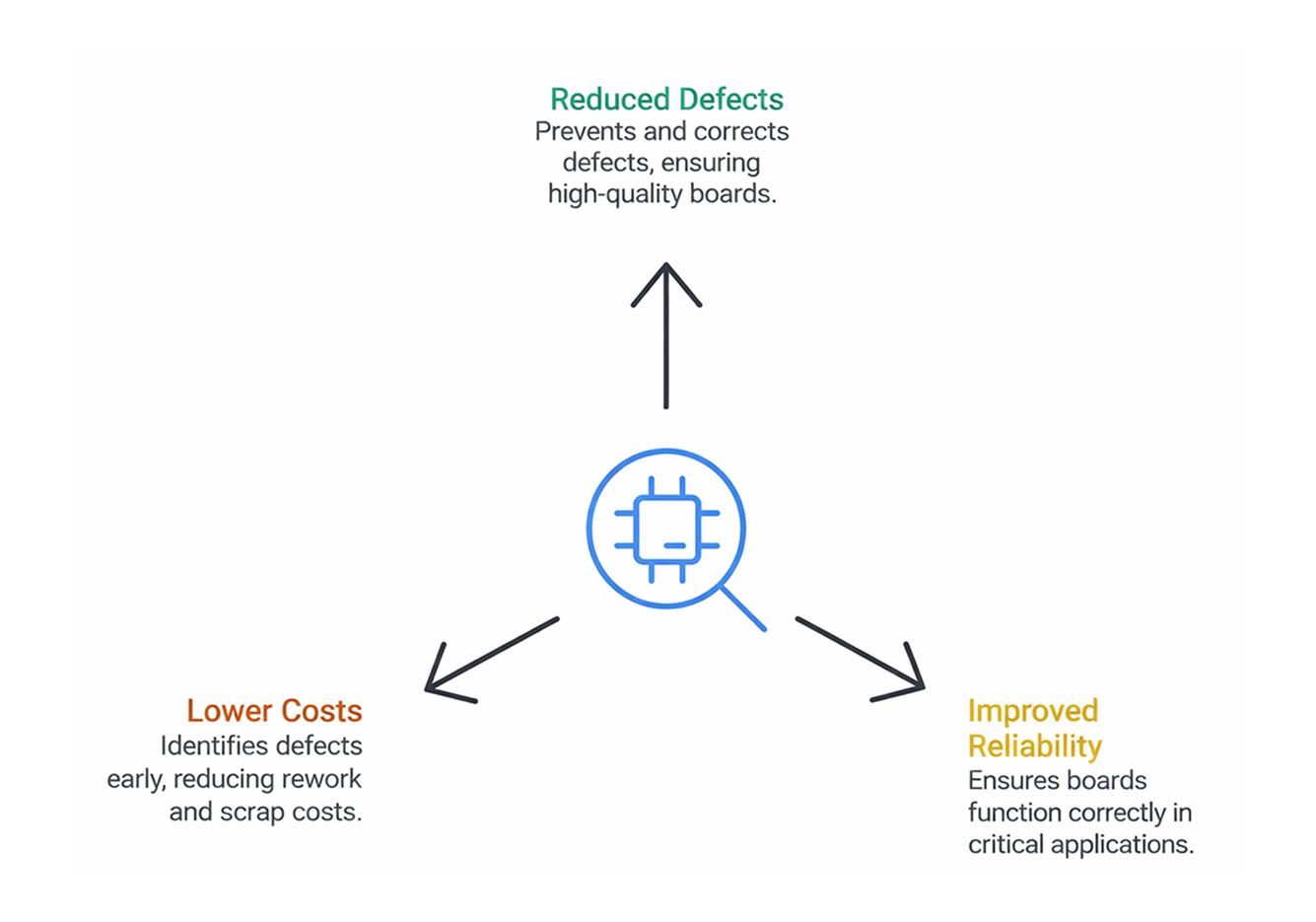
Benefits of Quality Control in PCB Board Manufacturing
Shifting Left With System Technology Co-Optimization for IC Packaging
Why Choose Tessolve?
Tessolve is widely recognized as one of the best PCB engineering and hardware companies due to its unwavering commitment to quality, cutting-edge technology. Our facilities are equipped with the latest 3D-AOI and AXI systems, and our engineers are IPC-certified to handle Class 3 High-Reliability electronics. With a team of highly skilled and experienced engineers specializing in PCB design, Tessolve has a proven track record of delivering high-quality and reliable products to diverse industries. They use the latest design techniques and methodologies to optimize PCB performance and minimize cost while prioritizing quality control measures so that the final product meets the required standards and specifications. Their focus on customer satisfaction has earned them a reputation as a trusted partner for engineering hardware solutions.
Conclusion
PCB engineering hardware is a complex process that requires strict quality control measures to understand that the final product meets the required standards and specifications. Quality control methods such as Automated Optical Inspection, X-Ray Inspection, Electrical Testing, and Visual Inspection are used to check that the boards are defect-free and meet the desired performance criteria. Effective quality control in PCB manufacturing services provides several benefits, including improved reliability, lower costs, and reduced defects. PCB manufacturers must prioritize quality control to ensure that the final product performs reliably in the field and meets the required quality standards.
Frequently Asked Questions (FAQs)
1: How do you ensure quality control when manufacturing printed circuit boards for aerospace?
Aerospace quality is ensured through AS9100 certification, rigorous thermal cycling, vibration testing, and 100% X-ray inspection of critical solder joints.
2: How does quality assurance in PCB production benefit from advanced inspection?
Advanced inspection, like 3D-AOI and AXI, identifies microscopic or hidden defects early, significantly reducing scrap rates and field failures.
3: What quality control processes does Screaming Circuits use?
They employ Design for Manufacturability (DFM) analysis, Automated Optical Inspection (AOI), and specialized X-ray systems to verify complex BGA connections.
4: What are the main steps in the custom PCB manufacturing process?
The process involves pre-production engineering, inner layer imaging, etching, lamination, drilling, plating, solder masking, and final electrical testing.
5: What is the difference between IPC Class 2 and Class 3 standards?
Class 2 is for dedicated service electronics (laptops/industrial), while Class 3 is for high-reliability products (medical/aerospace) where downtime is not an option.