Innovation in 5G technology in the automotive industry is accelerating with IoT advancements, Software-Defined Vehicles (SDVs), Edge AI, the deployment of high-speed networks, and intelligent in-vehicle technologies. However, the success of these innovations depends on robust hardware platforms, advanced PCB engineering, embedded systems, and reliable semiconductor integration. High-performance PCB design, hardware validation, and embedded engineering have become critical enablers of next-generation connected mobility.
There is research that might surprise you; according to the United States Department of Transportation report, around 94% of car accidents happen due to human error. They also found that only 2% of accidents happen due to technical errors. Reports also indicate that one in four deaths can happen due to overspeeding. So, the statistics indicate that most of the accidents are entirely preventable. So, connecting vehicles can come out as a game changer.
In this blog, we will explore how 5G IoT is reshaping the future of connected vehicles and the critical role PCB engineering, hardware design, and reliable PCB suppliers play in this ecosystem.
The Power of 5G IoT
5G is an evolution of the existing cellular networks and a paradigm shift in wireless connectivity. 5G IoT represents a revolutionary shift in wireless connectivity, offering ultra-low latency, high bandwidth, and extensive device connectivity. Connected vehicles utilizing 5G IoT can communicate with each other, infrastructure, and pedestrians in real-time, paving the way for a seamless and safe driving experience. With its remarkably low latency, connected vehicles can exchange critical information instantly, enabling advanced features and functionalities.
The high bandwidth of 5G networks ensures the smooth transmission of large data, supporting complex communication requirements. Moreover, 5G’s massive device connectivity capabilities allow seamless interaction between vehicles, infrastructure, and pedestrians. This connectivity fosters cooperative driving, enhances traffic management, and improves road safety. 5G IoT enables real-time data exchange for collision avoidance systems and enables intelligent transportation systems for efficient traffic flow. Combined with Edge AI and Multi-access Edge Computing (MEC), vehicles can process safety-critical data closer to the source, enabling faster decision-making while reducing dependence on centralized cloud infrastructure.
The power of 5G IoT in connected vehicles is set to revolutionize the automotive industry, creating a future where driving is safer, more efficient, and highly interconnected.
Enhanced Vehicular Safety
Connected vehicles with 5G IoT technology can instantly share data and exchange critical information. This enables real-time traffic updates, accident warnings, and autonomous driving. With 5G’s low latency and high reliability, connected vehicles can react quickly to sudden changes in road conditions, reducing the risk of accidents and improving overall road safety.
Modern Advanced Driver Assistance Systems (ADAS) further enhance safety by combining AI-powered perception, cameras, radar, LiDAR, and vehicle sensors to detect hazards more accurately. Additionally, secure Over-the-Air (OTA) software updates allow manufacturers to continuously improve vehicle performance, cybersecurity, and safety features throughout the vehicle lifecycle.
Intelligent Traffic Management
5G IoT facilitates the creation of intelligent transportation systems, enabling efficient traffic management and reducing congestion. With the help of sensors, cameras, and connectivity, vehicles can communicate with traffic lights, road signs, and other infrastructure components to optimize traffic flow. This technology also allows for dynamic route planning, reducing travel time and improving fuel efficiency.
AI-powered traffic analytics and digital twin technologies are also helping city planners monitor road conditions, predict congestion, and optimize traffic signals in real time. These capabilities improve overall transportation efficiency while supporting the development of smarter urban mobility ecosystems.
Seamless Vehicle-to-Everything (V2X) Communication
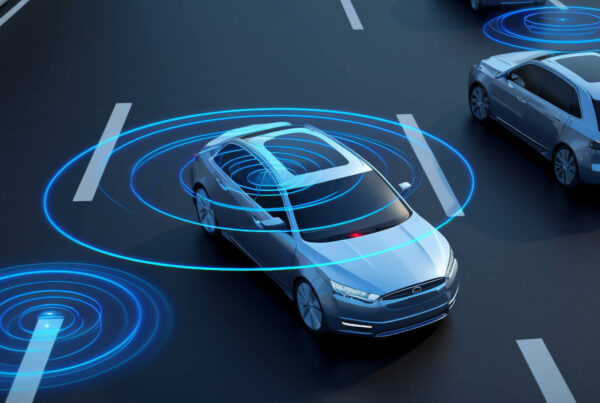
Vehicle-to-Everything (V2X) communication is critical to the connected vehicle ecosystem. It enables vehicles to communicate with other vehicles (V2V), infrastructure (V2I), pedestrians (V2P), and even networks (V2N). 5G IoT provides the bandwidth and reliability for seamless V2X communication, enabling real-time data exchange for collision avoidance, cooperative driving, and efficient transportation planning.
Importance of PCB Engineering and Design
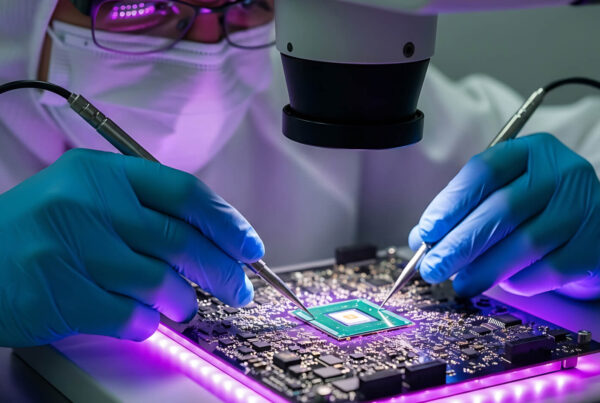
PCB engineering is the foundation of connected vehicle technology, enabling the seamless integration of sensors, communication modules, AI processors, and high-speed interfaces required for 5G IoT connectivity. Designing automotive-grade PCBs requires careful consideration of low-loss materials, high-frequency and mixed-signal layouts, EMI/EMC compliance, signal and power integrity, thermal management, and functional safety to ensure reliable performance in demanding environments.
Collaborating with a Reliable PCB Supplier
Automotive manufacturers must collaborate with trusted PCB suppliers such as Tessolve to bring the vision of connected vehicles to reality. A reliable PCB supplier can provide expertise in PCB manufacturing, ensuring that the PCBs meet the stringent requirements of automotive applications. They also support design optimization, hardware validation, Design for Manufacturability (DFM), and Design for Testability (DFT), helping reduce development cycles while improving product quality and production readiness.
Conclusion
The future of connected vehicles lies in the seamless integration of 5G IoT technology. Combined with AI, Edge AI, Software-Defined Vehicles, advanced semiconductor technologies, and intelligent PCB engineering, connected mobility is becoming safer, smarter, and more efficient. The transformative power of 5G IoT enables enhanced vehicular safety, intelligent traffic management, and seamless V2X communication. PCB engineering, hardware design, and collaboration with reliable PCB suppliers remain crucial in bringing this vision to reality. As connected and autonomous vehicle technologies continue to evolve, engineering expertise across hardware, embedded systems, and semiconductor design will play a vital role in shaping the future of intelligent transportation.
Frequently Asked Questions
1. How is 5G changing things in connected vehicles?
5G enables ultra-low latency, faster data exchange, and reliable connectivity, improving vehicle safety, V2X communication, navigation, and autonomous driving capabilities.
2. How does IoT integration enhance connected vehicle systems?
IoT integration connects vehicles with infrastructure, sensors, and cloud platforms, enabling real-time monitoring, predictive maintenance, and smarter transportation services.
3. What is the role of 5G in connected vehicles?
5G supports high-speed automotive connectivity by enabling seamless Vehicle-to-Everything (V2X) communication, real-time traffic updates, and advanced driver assistance systems.
4. How will IoT and connected cars evolve together over the next five years?
IoT and connected cars will advance through AI, edge computing, predictive maintenance, autonomous driving, and smarter vehicle-to-infrastructure communication.
5. What is the role of 5G in vehicle health monitoring solutions?
5G enables real-time transmission of vehicle diagnostics, allowing remote health monitoring, predictive maintenance, faster fault detection, and improved fleet management.