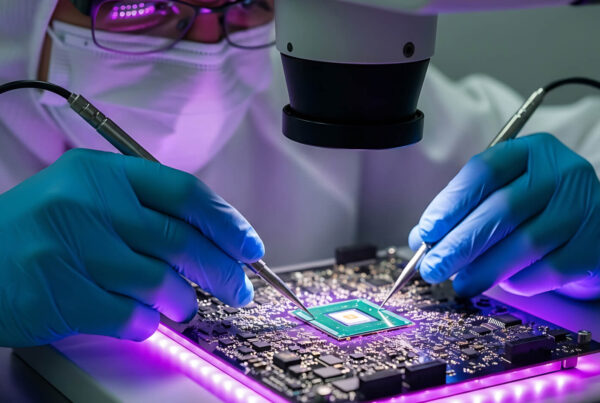
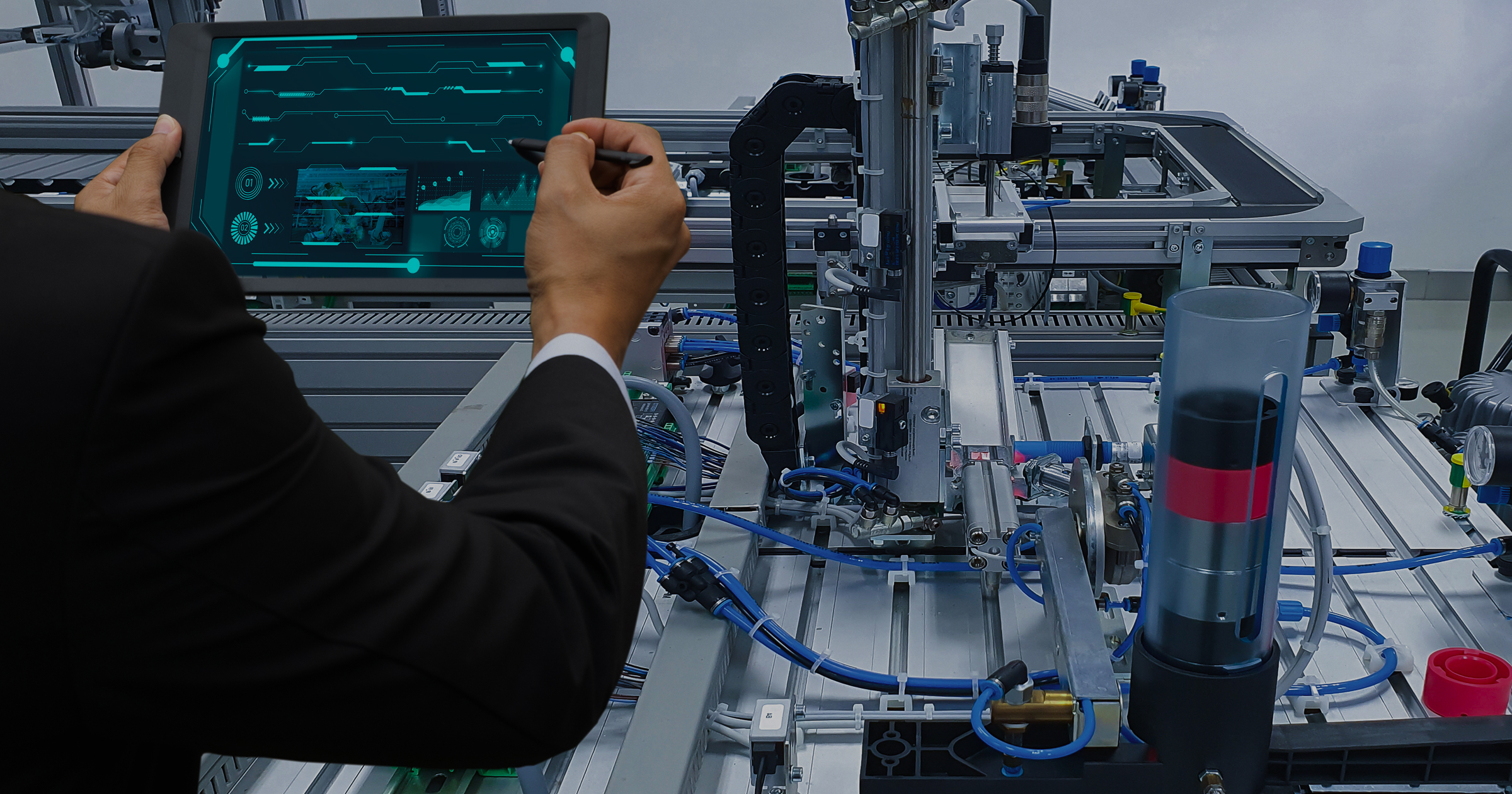
In an era where next-generation semiconductor technologies drive everything from smartphones to electric vehicles, testing is no longer a back-office activity; it’s a business-critical capability. Modernizing Automated Test Equipment (ATE) and the surrounding workflows transforms how organizations validate quality, accelerate time-to-market, and improve yield.
This blog explores what ATE modernization means, why it matters, the practical paths teams take, and how modern test practices unlock productivity across the semiconductor and electronics value chain.
What is ATE Modernization, and Why Now?
Automated Test Equipment (ATE) refers to systems that automatically perform electrical, functional, and parametric tests on Devices Under Test (DUTs). Traditionally, ATE systems focused on maximizing throughput and making low-level measurements. However, modernization now emphasizes agility, data-driven insights, and streamlined operations across the testing process. As products become more complex and node geometries shrink, manufacturers require testing solutions that not only measure performance but also predict failures and reduce testing time without sacrificing quality. For a detailed technical overview of ATE systems and their role in production testing, please refer to the standard definition.
Business Drivers for Modernization
Several strategic drivers push ATE modernization initiatives:
- Time-to-market acceleration: Faster test program development and modular ATE configurations enable companies to ramp new products into production more quickly.
- Cost reduction: Test time is a major manufacturing cost. Modern techniques like multi-site ATE testing, parametric optimization, and adaptive patterns reduce per-unit test expense.
- Yield improvement: Advanced analytics on test data help identify the root cause of yield loss and enable continuous improvement.
- Quality and compliance: More complex interfaces and safety-critical functions demand deterministic, well-documented test flows.
- Support for Advanced Packaging: Modern ATE solutions are designed to validate chiplets, 2.5D/3D packages, and heterogeneous integration used in next-generation semiconductor devices.
These business outcomes are realized through a combination of updated hardware, smarter software, and stronger process integration.
Key Pillars of ATE Modernization

1. Instrumentation and hardware modularity
Upgrading instrument front-ends, handlers and probers to modular architectures lets test engineers swap or scale resources without redesigning the entire ATE environment. Modular handlers and probe solutions also support multi-site testing to increase throughput.
2. Software orchestration and automation
Modern ATE modernization projects replace monolithic control software with orchestration layers that enhance test scheduling, parallelization, and resource allocation. Integrating these layers with MES/ERP systems improves factory visibility and throughput. Additionally, cloud-connected test management and digital twin technologies boost equipment utilization, remote diagnostics, and production planning in global manufacturing sites.
3. Test program reusability & platform-agnostic frameworks
Creating test libraries that are portable across platforms reduces rework during migrations. Reusable, layered test program architectures shorten NPI cycles and make long-term maintenance simpler.
4. Data-driven analytics & predictive maintenance
Collecting granular per-device telemetry and applying analytics uncovers weak signals that precede failures. Predictive binning, AI-powered analytics, and equipment health monitoring reduce unexpected downtime while improving manufacturing yield and Overall Equipment Effectiveness (OEE).
5. Security & lifecycle management
ATE modernization includes secure test access, signed test images, and controlled firmware updates to protect IP and ensure traceable revisions, especially critical for regulated or safety-sensitive products.
Hyper-Automation: Combining RPA, AI & Test Automation in Next-Gen ATE Workflows
The Role of Test Engineering in Modernization
Effective modernization involves more than just isolated upgrades; it requires transforming how test engineering operates. Test engineers need to shift from writing standalone test programs to developing comprehensive strategies that account for the design of the Device Under Test (DUT), failure analysis, manufacturing constraints, and data analytics. Skilled test engineering teams design probing, functional, and system-level flows, validating test coverage earlier in the product lifecycle to minimize surprises later on. Tessolve emphasizes the increasing importance of test engineering capabilities as a strategic asset for semiconductor manufacturers.
Modern ATE capabilities that deliver outcomes
- Multi-site parallelism tests many DUTs simultaneously to cut cycle time.
- Adaptive test sequences dynamically alter tests based on initial measurements to shorten test time for marginal devices.
- Remote orchestration manages distributed test assets and global test floors from centralized dashboards.
- AI/ML-assisted test flow optimization uses models to suggest optimal test points, reduce redundancies, and predict yield.
- Comprehensive failure-analysis integration instantly links ATE results to FA labs and reliability test benches for rapid turnarounds.
- Support for chiplet and advanced package testing enables efficient validation of heterogeneous semiconductor architectures.
These capabilities convert raw semiconductor testing data into business intelligence that reduces cost and improves product robustness.
Practical Steps for an ATE Modernization Program
- Assess current state: inventory platforms, test programs, test equipment and accessories bottlenecks.
- Define objectives: prioritize whether the primary goal is test-time reduction, yield improvement, or flexibility for new products.
- Select modernization levers: hardware refresh, software orchestration, analytics, or outsourcing to specialist labs.
- Pilot & iterate: validate concepts on a representative product before scaling across the floor.
- Operationalize: update SOPs, training, and change management to sustain gains.
Working with external partners that have broad ATE experience can shorten this journey and reduce risk.
ATE Modernization Across the Semiconductor Ecosystem
Modernization is not limited to wafer sort or final test at production; it spans New Product Development (NPD), system-level validation, and field-return analysis. The industry’s shift toward integrated services, combining semiconductor testing know-how with lab infrastructure, enables firms to accelerate NPI and handle large-volume production demands. Providers with expansive labs and multi-platform ATE testing experience become strategic partners for companies attempting ambitious modernization programs.
Trends Shaping the Next Wave of ATE Evolution
A few trends are shaping how modernization will progress over the next five years:
- Edge-to-cloud test analytics: moving insights from local silos into secured/ private cloud-based analytics platforms for fleet-level visibility.
- Platform consolidation: standardizing on fewer, more flexible systems to simplify maintenance and training.
- Tighter design-for-test (DFT) collaboration: earlier DFT in the design flow to reduce test complexity and improve coverage.
- AI-driven test optimization: Machine learning continues to automate test generation, optimize test coverage, and reduce overall production test time.
- Advanced package testing: The growing adoption of chiplets and 3D integration is driving demand for new ATE capabilities to support system- and package-level validation.
Industry leaders are already experimenting with these trends to convert test floors into competitive advantages.
The Future of Test Engineering: How Automation is Changing the Game
Tessolve: From our test engineering desk
At Tessolve, we partner with semiconductor and electronics companies to modernize their ATE and test workflows end-to-end. Our test labs host over 40 ATE platforms and hundreds of engineers, enabling rapid validation from NPD to high-volume production. We combine semiconductor testing, program development, handler/prober integration, failure analysis, and analytics to reduce test time and improve yield. Tessolve’s approach emphasizes modular architectures, platform-agnostic libraries, and data-driven optimization, allowing customers to accelerate productization while controlling cost and quality. With deep expertise in ATE testing and world-class test engineering, Tessolve delivers efficiency and scalability for the next generation of electronics. Our capabilities also extend to advanced package validation, system-level testing, and AI-assisted test optimization for next-generation semiconductor products.
Frequently Asked Questions
1. What is Automated Test Equipment (ATE)?
Automated Test Equipment (ATE) is a computerized system that performs electrical, functional, and parametric tests on semiconductor devices automatically.
2. What is ATE testing in semiconductor manufacturing?
ATE testing verifies semiconductor performance, functionality, and reliability before shipment, helping improve product quality, manufacturing yield, and production efficiency.
3. What types of tests can Automated Test Equipment perform?
ATE performs functional, parametric, DC, AC, memory, RF, and system-level tests to validate semiconductor devices under different operating conditions.
4. Why is ATE important in VLSI testing?
ATE enables fast, accurate, and repeatable testing of VLSI chips, reducing test time, manufacturing costs, and the risk of defective devices.
5. How does ATE modernization improve semiconductor testing?
ATE modernization enhances testing through automation, AI-driven analytics, multi-site testing, predictive maintenance, and improved data management for higher efficiency.